Circular AV vs traditional AV: what’s the difference?
Your organisation has ambitious sustainability goals. You’re recycling, reducing energy consumption and making conscious choices when it comes to sustainable solutions. But what do you do when your AV equipment reaches the end of its life? And how can you ensure new investments genuinely contribute to a circular economy?
For many Facilities and IT Managers, this is a familiar challenge. You know circularity is becoming increasingly important, but what does a circular AV solution actually mean in practice? And how does it differ from a traditional AV installation?
Our specialist Kjeld Veenhuis, who has been involved in the development of BRIX zero, the Netherlands’ first circular AV solution, from the very beginning, is regularly asked these questions. Drawing on his experience, he helps organisations make more sustainable choices and sees first-hand where the biggest differences lie between traditional and circular AV systems.
In this article, you’ll discover:
- The real difference between circular and traditional AV equipment
- Why the traditional model often falls short (and what you can do about it)
- How a circular AV solution works in practice
- The differences in costs, performance and sustainability impact
- A practical checklist for evaluating AV suppliers
After reading this article, you’ll know exactly what to look for when choosing a new AV solution and be able to make an informed decision that supports your organisation’s sustainability objectives.
The iPhone drawer: a familiar problem
During a conversation about making AV installations more sustainable, Kjeld encountered a situation many organisations will recognise. The client stood up, opened a drawer and said:
“Look, this is exactly the problem.”
Inside were five old iPhones. Different models, all still working, but replaced by newer devices.
“I know I should recycle them, but where do I take them? Back to the network provider? Apple? Honestly, I never get round to finding out. So they just stay here.”
Then he looked at Kjeld and said:
“And these are only five phones. We have forty meeting rooms, each with at least five AV components. If I can’t even manage five iPhones properly, how am I supposed to manage hundreds of AV devices in a circular way?”
It’s a situation many organisations can relate to.
Not because they don’t want to work sustainably, but because responsibility for reuse and recycling is often left to the end user. And that’s exactly where the traditional model starts to break down.

Circular AV vs traditional AV: it’s about more than recycling
When people hear the term circular AV, they often think immediately of recycling. But circularity starts much earlier.
The difference isn’t just about what happens at the end of a product’s life. It’s about how equipment is designed, managed and reused throughout its lifecycle.
Traditional AV equipment
- You buy the equipment and become the owner.
- After a number of years, the entire system is replaced.
- Disposal and recycling become your responsibility.
- Reuse is rarely built into the process.
- Valuable materials often leave the supply chain permanently.
Circular AV solutions
- You use the equipment without necessarily owning it.
- Components can be upgraded or replaced individually.
- The supplier remains responsible for the equipment.
- Reuse and refurbishment are built into the process.
- Materials remain in circulation for as long as possible.
The key difference comes down to ownership and responsibility. With a traditional model, responsibility ultimately sits with the organisation using the equipment. With a circular AV solution, the supplier remains responsible for the product throughout its entire lifecycle.
That’s the foundation of a genuinely circular system.
The ownership challenge: why traditional AV often falls short
In practice, many organisations genuinely want to operate more sustainably. Yet things become difficult when AV equipment reaches the end of its useful life.
The problem isn’t intent. It’s the way traditional AV solutions are structured.
With a traditional AV installation, you purchase the equipment and become responsible for maintenance, replacement and disposal.
That often leads to four challenges.
1. The ownership issue
2. A fragmented disposal chain
3. No visibility of a second life
4. Short innovation cycles
This doesn’t mean traditional AV suppliers and installers are doing a poor job. Many have the best intentions. The issue is that the system itself wasn’t designed around circularity.
The circular solution: responsibility throughout the entire lifecycle
A circular AV solution takes a fundamentally different approach.
Instead of simply supplying equipment, the provider remains responsible for the complete lifecycle of the system. Circularity becomes an integral part of the service rather than a separate ambition.
Supplier ownership
Modular design
A controlled circular process
Flexibility to embrace innovation
Costs and performance: how do circular and traditional AV compare?
A common question is: “Circular AV sounds great, but does it deliver the same performance? And what about cost?”
It’s a fair question. After all, you need a solution that’s both sustainable and reliable.
Comparing costs
With traditional AV, the largest investment is usually made upfront. With circular AV, the financial model looks different. You typically pay a fixed monthly fee that includes maintenance, support and equipment management.
Potential benefits include:
- No major upfront investment
- Maintenance and support included
- Easy upgrades without buying an entirely new system
- No disposal costs or end-of-life concerns
As a result, total lifecycle costs are often easier to predict.
Performance and reliability
Circular systems often use exactly the same components as traditional systems. The difference lies in how they’re managed. Because suppliers remain responsible for performance, they have a direct incentive to keep systems operating at their best.
Example: 50 meeting rooms
To illustrate the difference, let’s compare a traditional and circular approach.
Traditional AV
An organisation replaces the AV equipment in 50 meeting rooms every five years. At approximately €3,500 per room, the initial investment totals €175,000. This excludes depreciation, financing costs, maintenance, support and licences. At the end of the lifecycle, the organisation remains responsible for disposing of hundreds of AV components.
Circular AV
The same organisation chooses a circular AV solution. They pay €149 per room per month for a comparable solution, including service and support. After three years, selected components can be upgraded to newer technology. The supplier manages all reuse and end-of-life processing.
The result
- Lower monthly costs
- Always up-to-date technology
- No concerns about disposal or reuse
- A measurable contribution to circularity goals
Important: The decision between traditional and circular AV shouldn’t be based solely on purchase price. It should consider total lifecycle costs and sustainability impact.

Your evaluation tool: how to identify a truly circular AV supplier
Not every supplier that talks about sustainability offers a genuinely circular solution.
Use these questions as a quick assessment tool.
About ownership
□ Does the supplier remain the owner of the equipment?
□ What happens to the equipment at the end of the contract?
□ Can they provide guarantees around reuse?
About modularity
□ Can individual components be replaced?
□ Can the system be upgraded without full replacement?
□ How flexible is the solution if requirements change?
About transparency
□ Will I receive visibility into what happens to old equipment?
□ Can the supplier demonstrate that reuse genuinely takes place?
□ What sustainability certifications do they hold?
About cost
□ What are the total lifecycle costs?
□ Are maintenance and support included?
□ What does it cost to upgrade to new technology?
If a supplier can’t answer these questions clearly, it’s worth investigating further. A circular solution is about much more than recycling. It’s about ownership, transparency and responsibility throughout the entire lifecycle of the equipment.
From ambition to impact: take the next step towards circular AV
The choice between traditional and circular AV goes beyond how you acquire technology.
It’s about how your organisation approaches resources, ownership and the lifespan of technology.
With a traditional approach, responsibility for maintenance, replacement and disposal ultimately rests with your organisation. This makes it difficult to maintain control over reuse and circularity goals.
A circular AV solution starts from a different premise.
The supplier remains responsible throughout the entire lifecycle. Materials stay in use longer, waste is reduced and you gain greater visibility into the sustainability impact of your investment.
That’s why more and more organisations are making the switch. Not only because it supports their sustainability ambitions, but also because it delivers greater flexibility, more predictable costs and fewer management concerns.
Download our BRIX zero guide “Become a leader in sustainable AV in 4 steps” below and discover how to take the next step!
Download the guideOpens in new tab:AVEX helps organisations transition to circular AV
Circularity requires a different way of thinking and working.
At AVEX, we support organisations at every stage, from developing a sustainable AV strategy to designing, implementing and managing circular AV solutions.
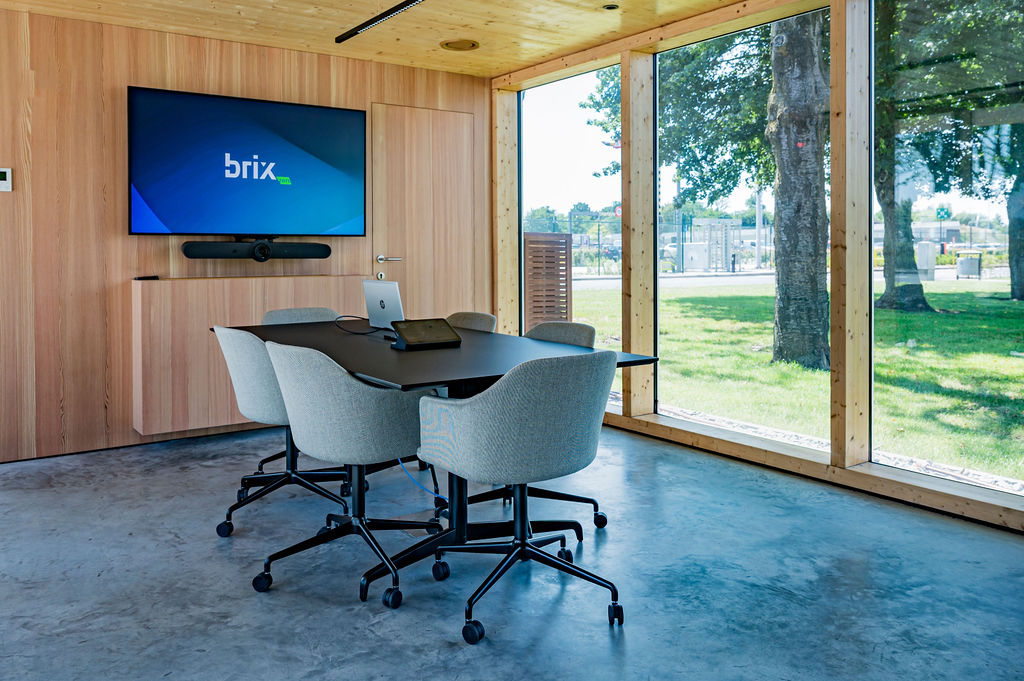
With BRIX zero, we’ve created a solution that combines circularity, performance and ease of use. It helps organisations build future-ready audiovisual environments without compromising on quality or user experience.
That means you’re making a sustainable choice not just for today, but for years to come.

Kjeld Veenhuis
Account Manager

Publication date
29 August 2025
Updated date
25 August 2026
Sector
All Sectors, Central Government, Culture, Sports & Recreation, Education, Financial & Professional Services, Government, Healthcare, Hospitality, Local Government, Public Safety & Security, Retail, Trade & Industry
Solution
Boardrooms, Digital Signage, LED walls, Meeting Rooms
Keep discovering