Sustainable AV: why BRIX zero isn’t for sale
More and more organisations want to make their audiovisual environments more sustainable. Yet traditional ways of purchasing AV equipment often work against that goal. Equipment is bought, depreciated and replaced after a number of years, even though it may still be performing perfectly well.
The result? Unnecessary costs, wasted resources and a growing CO₂ footprint.
That’s why more organisations are choosing a different approach: instead of owning equipment, they use it as a service. That’s the principle behind BRIX zero.
You may already have noticed that BRIX zero isn’t available to buy. It can only be used through a Product-as-a-Service model. Why was this choice made? And what does it mean for your organisation?
To answer these questions, we spoke to Kjeld Veenhuis, Sustainable AV Specialist at AVEX. Since the earliest development of BRIX zero, he’s been involved in the circular concept. Every day, he helps organisations view AV technology differently: not as an asset that’s eventually replaced, but as a service that evolves alongside the organisation.
In this article, you’ll discover:
- Why BRIX zero isn’t sold as a standalone product and why that’s actually the strength of the concept
- The difference between traditional AV purchasing and a circular service model
- How Product-as-a-Service works in practice
- How to reduce waste while gaining greater control over costs, circularity and CO₂ impact
By the end of this article, you’ll understand why BRIX zero is more than just another AV product. You’ll discover how this sustainable AV concept supports the circular economy, cost control and CSRD objectives, while helping you create AV installations that evolve rather than become obsolete.
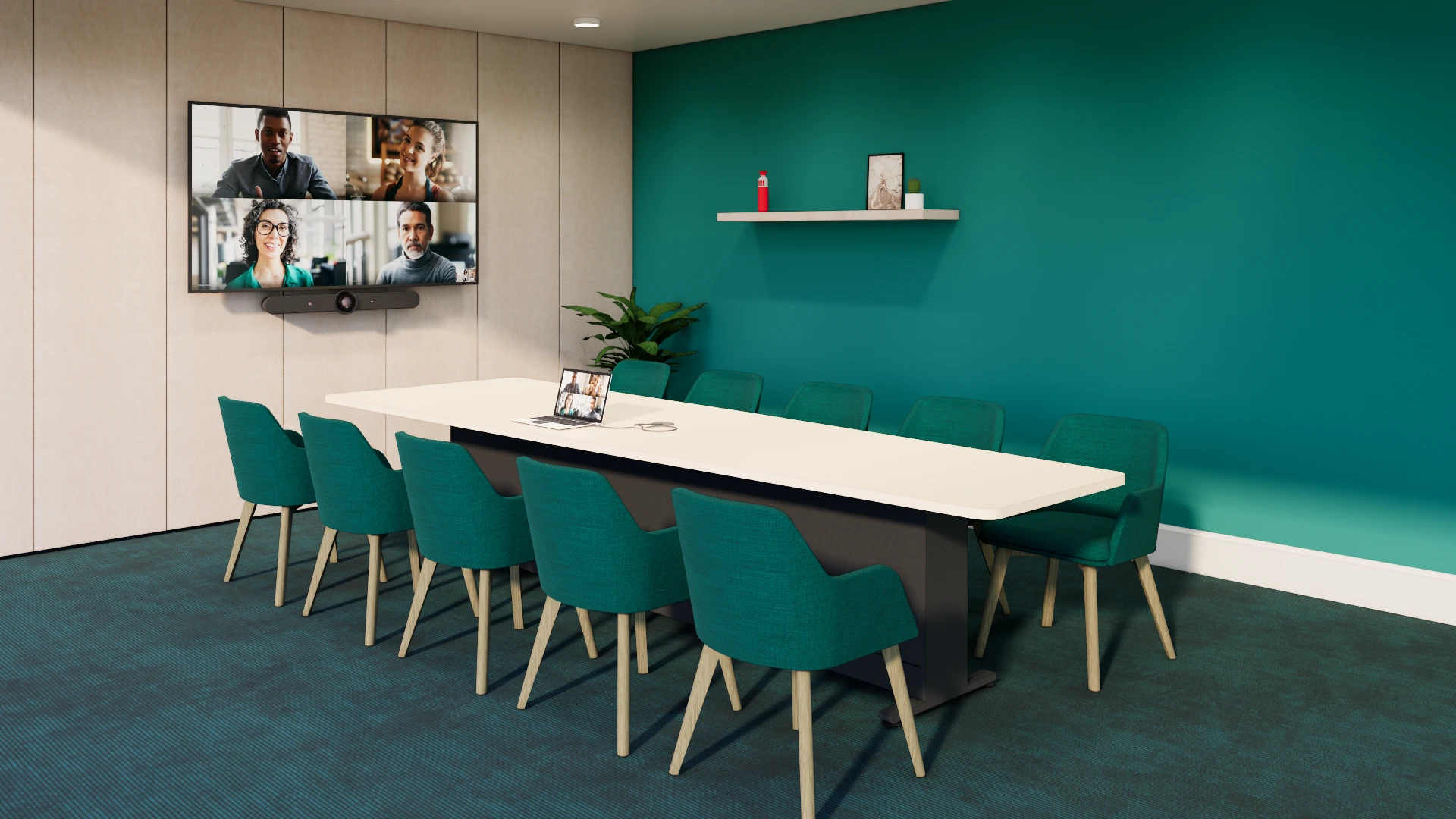
Why sustainable AV requires more than energy-efficient equipment
When organisations invest in sustainable AV, the focus is often on energy consumption or more efficient hardware. But truly sustainable AV solutions go much further than that.
The way equipment is used, maintained and eventually reused also determines its environmental impact.
With traditional AV procurement, responsibility ends once the equipment has been delivered. The organisation owns the equipment, depreciates it and often replaces it after a few years, even when many components remain perfectly usable.
That’s why genuinely sustainable AV requires a different mindset: less focus on ownership and more focus on maximising lifespan and reuse.
A digital solution with less environmental impact
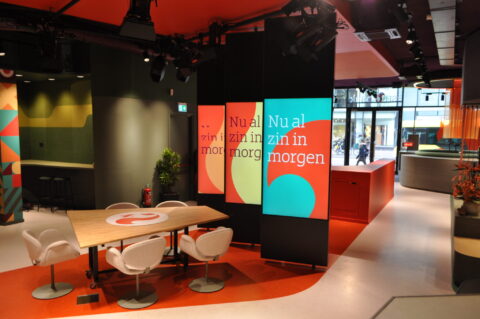
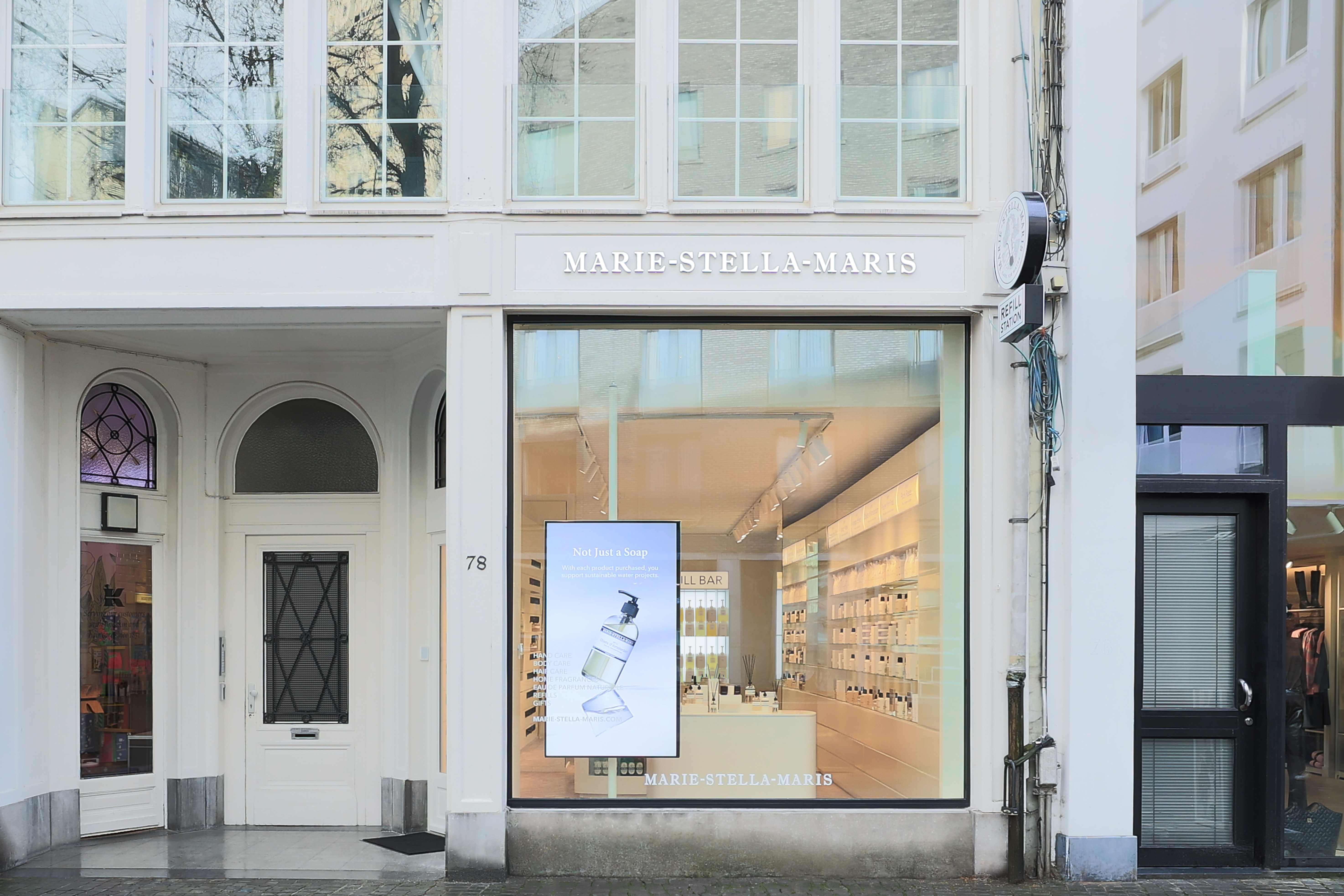
At Marie-Stella-Maris, the sustainability challenge started with a practical question: “How can we make our in-store communication more sustainable without compromising on appearance or flexibility?”
The company regularly replaced posters, stickers and other physical communication materials in its stores. This created additional transport, waste and CO₂ emissions.
Together, we explored the possibilities of digital signage. But rather than simply supplying new displays, we looked for a solution that aligned with the organisation’s circular ambitions.
That solution was BRIX zero.
Through this modular Product-as-a-Service model, AVEX remains the owner of the audiovisual installations. This allows equipment and components to remain in use for longer, be refurbished where possible and ultimately be reused responsibly.
For Marie-Stella-Maris, this resulted in a digital solution that is not only flexible and future-ready, but also demonstrably reduces waste, lowers CO₂ emissions and supports a circular way of working.
And that’s exactly what sets BRIX zero apart.
It wasn’t developed to sell as much equipment as possible, but to keep AV installations valuable for as long as possible.
From ownership to usage: what is Product-as-a-Service?
The circular model behind BRIX zero is based on Product-as-a-Service (PaaS). Instead of buying audiovisual equipment, organisations use it as a service. They pay a fixed monthly fee while AVEX remains the owner of the equipment.
That ownership model is crucial. Because AVEX retains ownership, we can manage and optimise the entire lifecycle of the equipment.
This means AVEX remains responsible for:
- The performance and quality of the AV installation
- Maintenance, repairs and software updates
- Transparency around energy consumption, origin and CO₂ impact
- Reuse, refurbishment and responsible recycling of equipment
The result is a model that focuses not only on performance, but also on preserving the value of products and materials for as long as possible.
How does that work in practice?
Imagine your organisation uses three displays that are replaced after four years.
With a traditional purchasing model, those displays often end up in storage, are discarded or require internal processing, despite many of the components remaining fully functional.
With BRIX zero, the process works differently.
AVEX takes the displays back, assesses their condition and determines which components can be reused. Where possible, equipment is refurbished or given a second life in another environment.
This keeps materials in circulation for longer and significantly reduces waste.
For your organisation, very little changes in day-to-day operations. You continue to benefit from a reliable AV solution, while maintenance, replacement and reuse are all taken care of.
Traditional AV purchasing versus BRIX zero
The biggest difference between traditional AV and BRIX zero isn’t just how you pay for it. It’s how equipment is managed throughout its lifecycle.
| Feature | Traditional AV purchasing | BRIX zero (as-a-service) |
| Ownership | Your organisation owns the equipment | AVEX remains the owner of the equipment |
| Investment | Large upfront capital investment (CAPEX) | Predictable monthly operating costs (OPEX) |
| Replacement | Equipment is often replaced according to a fixed cycle | Components are replaced only when necessary |
| Waste production | Higher waste levels when systems are retired | Equipment is reused or refurbished wherever possible |
| Carbon footprint | Limited visibility of total CO₂ impact | Clear reporting on carbon impact and circularity |
| Service | Maintenance and support are usually purchased separately | Installation, monitoring, maintenance and updates are included |
| Reports | Sustainability reporting is your responsibility | Sustainability insights are provided through transparent GSES reporting |
By combining ownership and lifecycle management, BRIX zero creates a solution that’s not only more sustainable but also gives organisations greater control over performance, costs and sustainability objectives.
What does this mean for you?
You may recognise some of these challenges:
- Your organisation wants to meet sustainability targets, including CSRD and ESG requirements
- You need predictable costs and fewer unexpected investments
- Ageing equipment creates additional management overhead
- You have limited visibility of the environmental impact of your AV environment
When investing in new AV installations, organisations generally choose between two approaches.
Traditional AV purchase (CAPEX)
When you buy equipment outright, you benefit from:
- Full ownership
- Complete control over replacement cycles
- The option to continue using equipment after depreciation
But it also comes with:
❌ Significant upfront investment
❌ Depreciation and asset value loss
❌ Responsibility for maintenance and updates
❌ Responsibility for sustainable disposal and recycling
Circulair Product-as-a-Service (OPEX)
With a circular service model:
- Predictable operational costs
- No major upfront investment
- Maintenance, updates and replacement included
- Equipment can be reused multiple times
- Transparent sustainability reporting through independent platforms such as GSES
The trade-off is that:
❌ You don’t own the hardware
❌ You’re working within a service agreement
❌ Costs continue throughout the contract term
There is no universal right answer.
Traditional purchasing offers ownership and flexibility. Product-as-a-Service offers predictability, reduced management effort and a circular approach.
The right choice depends on your financial strategy, sustainability ambitions and how you want to manage your AV environment.
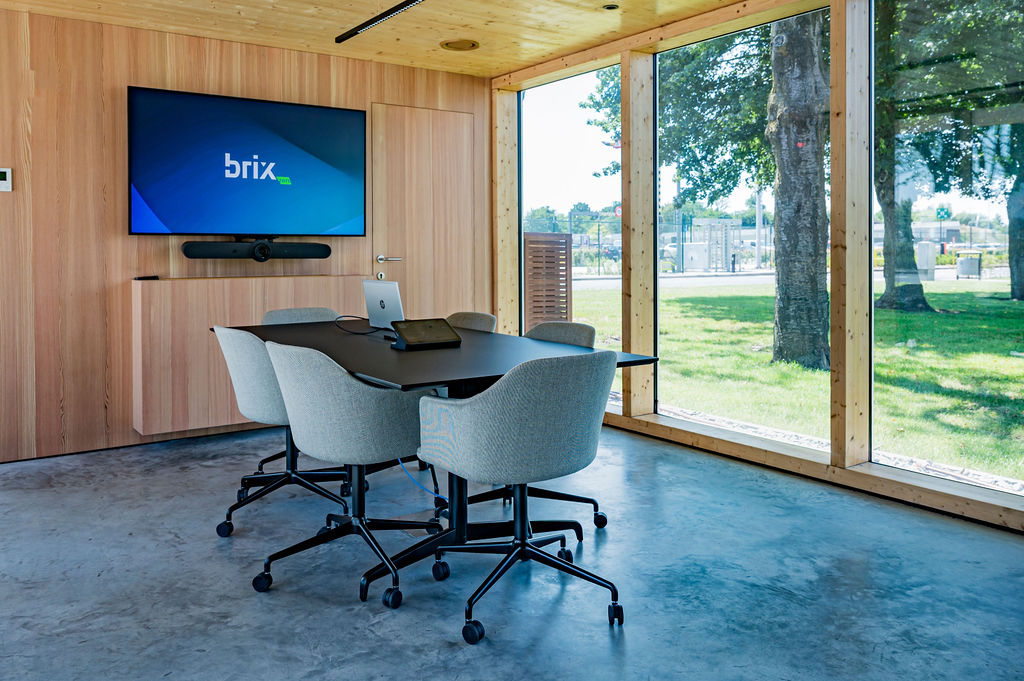
From linear ownership to circular use
To understand the move towards OPEX and Product-as-a-Service models, it helps to look at a broader shift within the AV industry.
Traditionally, AV follows a linear model: Buy → Use → Dispose. After a number of years, equipment is depreciated and replaced, often before every component has reached the end of its useful life.
More organisations are now embracing a circular approach:
- You use only what you actually need
- Equipment receives a second or even third life through refurbishment and reuse
- You gain visibility into CO₂ impact, origin and performance through recognised platforms such as GSES
This reduces waste and provides greater control over the sustainability of your AV environment.
The next step for your sustainable AV strategy
BRIX zero offers a fundamentally different approach to AV.
Instead of buying equipment, you use it through a circular service model. This creates a lifecycle in which equipment is used to its maximum potential, waste is minimised and sustainability performance becomes transparent.
The model addresses real business challenges: predictable costs, no depreciation risks, no concerns about ageing technology, and measurable contributions to sustainability goals. At the same time, you benefit from a reliable AV solution that grows alongside your organisation.
As a BRIX zero specialist, Kjeld Veenhuis helps organisations implement circular AV strategies that reduce waste, extend equipment lifecycles and lower CO₂ impact.

Kjeld Veenhuis
Account Manager

Publication date
22 August 2025
Updated date
25 August 2026
Sector
All Sectors, Central Government, Culture, Sports & Recreation, Education, Financial & Professional Services, Government, Healthcare, Hospitality, Local Government, Public Safety & Security, Retail, Trade & Industry
Solution
Boardrooms, BRIX zero, Digital Signage, LED walls, Meeting Rooms
Keep discovering