Rent or buy a video studio: which is right for your organisation?
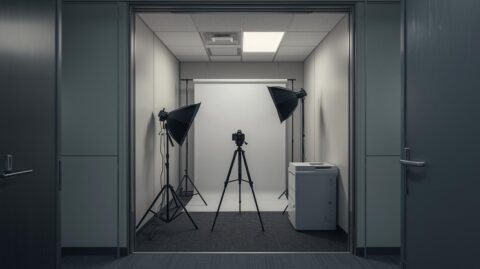
Many organisations want to create more professional video content for internal communications, marketing, training or employer branding. An in-house video studio often seems like the logical next step.
But once plans become more concrete, an important question arises: should you rent a video studio or buy one?
Buying a studio may seem attractive at first glance. You make a one-off investment and the equipment becomes your organisation’s property. At the same time, owning a studio comes with responsibilities such as maintenance, updates and technical support.
Many marketing, communications and AV professionals focus primarily on the purchase price when making this decision. But a professional video studio consists of much more than just equipment.
Factors such as frequency of use, technical expertise, flexibility and future developments all play an important role.
At AVEX, we help organisations make this decision every day. One example is a marketing director who was convinced that buying was the best option.
“After two years, we’ll have earned the investment back.”
However, after a thorough analysis, renting turned out to be the better fit for his situation. By choosing a Studio-as-a-Service model, his team gained more flexibility and spent less time dealing with technical challenges.
Six months later, he told us:
“Choosing to rent was the right decision. We’re using the studio far more than expected, we’ve already adjusted the setup twice, and my team can focus entirely on creating content instead of solving technical issues.”
In this article, you’ll discover:
- The main differences between renting and buying a video studio
- The advantages and considerations of both options
- A three-year cost comparison
- The factors that determine which option is best
- A practical framework for assessing your needs
After reading, you’ll be able to make a well-informed decision that fits your organisation.
Why focusing only on purchase costs can be misleading
When organisations consider a video studio, the focus often falls on the initial investment.
As a result, buying can quickly appear to be the most cost-effective option. You pay once for the equipment and retain full control. But the true cost goes beyond the purchase price.
With a purchased studio, you’ll also need to account for:
- Maintenance and repairs
- Software updates
- Technical support
- Replacing outdated equipment
- Employee time spent managing the studio
On top of that, business requirements often change faster than expected. A studio that perfectly meets today’s needs may no longer be suitable in a few years because of new technologies or evolving content requirements.
That’s why it’s important to look beyond ownership and focus on the value the solution delivers to your organisation.

Below, we’ve made a list of all the pros and cons of both renting and buying a studio:
Renting a studio: flexibility without technical concerns
Renting a video studio means your organisation benefits from a professional studio environment without having to manage every technical aspect yourself.
This makes renting particularly attractive for organisations that want flexibility and prefer to focus on content creation.
Benefits of renting:
- No technical worries. Maintenance, repairs and software updates are handled for you. Ideal if your team wants to focus on content rather than technology.
- Lower upfront costs. Instead of a substantial capital investment, you pay a predictable monthly fee, making budgeting easier.
- Flexibility as you grow. Your requirements may change over time. Perhaps you’ll need additional capabilities or want to expand to multiple locations. Renting makes adaptation much easier.
- Access to the latest technology. The AV industry evolves quickly. Renting gives you access to up-to-date technology without additional investments.
Things to consider:
❌ Higher long-term costs. If you’re planning to use the studio intensively for many years, renting may ultimately cost more than buying.
❌ Less ownership and control. Changes often depend on the supplier, and there may be less freedom to customise the studio compared with an owned environment.
Buying a studio: maximum control and ownership
Buying a video studio means investing in equipment and becoming the owner of the entire setup.
This option is generally best suited to organisations that use their studio extensively and have the expertise to manage it.
Benefits of buying:
- Lower costs over the long term. If you expect to use the studio intensively for three to five years or more, ownership can often become more cost-effective.
- Complete control. You decide exactly how the studio is designed, configured and upgraded.
- No monthly rental costs. Once the investment has been made, you’ll only pay for maintenance, upgrades and support.
Things to consider:
❌ High upfront investment. A significant budget is required before you can create your first recording.
❌ Technical responsibility. Maintenance, repairs and updates become your responsibility, requiring internal expertise or external support.
❌ Technology can become outdated. AV technology develops rapidly. Additional investments may be required within a few years to stay current.
❌ Less flexibility. Changes to your requirements often result in additional investments rather than a simple contract adjustment.
Rent or buy: a three-year cost comparison
A fair comparison should go beyond the purchase price alone.
You should also consider maintenance, software updates, support and future replacement costs.
| Option | Investment | Maintenance/updates | Total 3 years |
| Buying a studio | €28.000 | ± €2.500 per year + €800 software | €37.900 |
| Renting a studio | €890 per month | Included | €32.040 |
In this example, renting is €5,860 cheaper over a three-year period.
In addition, renting provides extra security because support, replacement of faulty equipment and ongoing optimisation are included.
How to determine which option suits your organisation
Step 1: Assess current and future usage
Ask yourself:
- How many recordings do we currently produce each month?
- What types of content will we create over the next few years?
- How many employees will use the studio?
- Do we expect our video production needs to grow?
Step 2: Consider your organisation
Think about:
- Do we have technical expertise in-house?
- How stable are our plans over the next few years?
- Does a large upfront investment fit our strategy?
- How important is flexibility?
Step 3: Calculate total cost of ownership
Don’t just compare purchase and rental costs.
Include:
- Maintenance
- Updates
- Support
- Staff time
- Future replacement costs
Step 4: Learn from others
- Speak with organisations that have faced the same decision
- Ask suppliers for customer references
- Consider a pilot or trial period
Which option is right for your organisation?
There is no universal answer. The right choice depends on your organisation, your team and your future plans.
An organisation that values ownership and complete control may benefit from purchasing a studio. An organisation that prioritises flexibility and future readiness may be better served by renting or choosing a Studio-as-a-Service model.
At AVEX, we help organisations make this decision by looking beyond equipment alone. We consider how the studio will be used, what you’re trying to achieve and where your organisation is heading. That way, you choose a solution that works not only today, but also in the years ahead.

Jacqueline Borremans
Business Consultant

Publication date
22 August 2025
Updated date
25 August 2026
Sector
All Sectors, Central Government, Culture, Sports & Recreation, Education, Financial & Professional Services, Government, Healthcare, Hospitality, Local Government, Public Safety & Security, Retail, Trade & Industry
Solution
In-House Studios
Keep discovering